Celebrating the 10th National Day of Racial Healing with our new podcast series: Hope in Action.

Hope in Action Podcast Series

Town Hall - Communities Creating Safety and Security: What Works

Read More

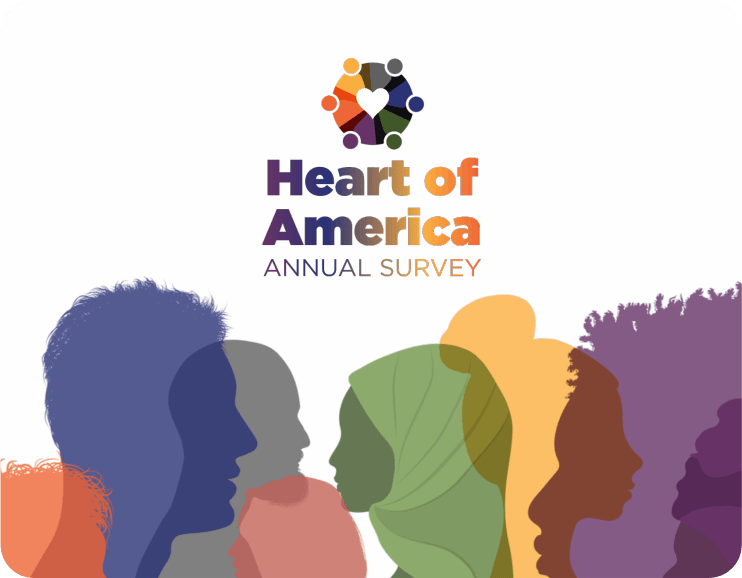
Heart of America Annual Survey: A Call for Unity and the Power of Racial Healing

Learn More

Selma Jubilee 2025

Read More

HOPE Initiative Update: Explore the refreshed HOPE Initiative website featuring the 2024 indicator updates!

Read More

NCHE 2024 Convening - Embracing Our Shared Humanity: Bridging Perceived Divides

Read More
Close Bar
National Collaborative for Health Equity - Communities Working Together for Racial and Health Equity
  • About Us
    • History & Mission
    • Staff
  • Our Work
    • Leadership Support
      • Culture of Health Leadership Institute for Racial Healing
      • Culture of Health Leaders
      • Collaboratives for Health Equity (CHE).
    • Data Tools & Resources
      • The Health Opportunity and Equity (HOPE) Initiative
      • Leveraging Health Opportunity and Equity
      • Transform Public Health Data Systems (TPHD)
      • 3rd Annual Heart of America National Survey: The Power of Racial Healing
    • TRHT
      • Mapping Support for TRHT
      • TRHT Places
      • Healing Through Policy
  • Resources
    • TRHT
    • Leadership Support
    • Data Tools & Resources
    • Narrative Change
    • Racial Healing & Relationship Building
    • Separation
    • Law
    • Economy
    • Food Security
    • Criminal Justice
    • Environmental Justice
    • Health Equity
    • Racial Equity
    • Publications
    • Town Hall Recap & Resources
    • Hope in Action Podcast Series
  • Contact Us
  • Donate
  • Search
Resources » Health & Medical Care » Forget the Bacon: Living in Poverty Means You Have An Advanced Risk of Getting Cancer

Forget the Bacon: Living in Poverty Means You Have An Advanced Risk of Getting Cancer

Health & Medical Care
October 30, 2015
by Lawrence Ware + Rebecca Martinez | NewBlackMan (in Exile)
The World Health Organization recently released a press statement on the carcinogenicity of the consumption of red meat and processed meat. The statement, which elicited media headlines comparing eating hot dogs to smoking cigarettes, reported findings from a group of 22 global experts examining more than 800 studies to evaluate the association between cancer and consumption of red meat and processed meat.
Unlike the frenzied headlines that misunderstand cancer risk and classification, the actual WHO statement reported on carcinogenic (potential cancer causing) classifications, not the magnitude of risk. Specifically, they classified processed meat as carcinogenic to humans (Group 1) because of the numerous studies with similar findings linking consumption to colorectal cancer.  Because processed meat is now classified alongside cigarette smoking in Group 1, the inevitable confusion results with people assuming that smoking cigarettes is comparable to eating sandwich meat.
Meat, unlike cigarettes, has nutritional value and to make flippant comparisons between the two is not helpful, but in fact adds confusion to dietary recommendations. The research supports much of what has been already stated about limiting meat consumption, but it does not point to radically altering people’s diets based on this information.
Yet, one question remains. What does this mean for those living in poverty?

Read full article here.

Related Resources & News.

June 3, 2026

Cultivating Health Through Shared Prosperity and Street Food

Read More
May 28, 2026

AI Hiring Tools Can Yield Racial Bias and Systemic Rejection

Read More
April 30, 2026

NCHE RELEASES THIRD EPISODE OF HOPE IN ACTION PODCAST EXPLORING RACIAL HEALING AND HUMAN DIGNITY

Read More
April 20, 2026

DR. GAIL C. CHRISTOPHER REFLECTS ON FIVE DECADES OF ADVOCACY FOR BLACK MATERNAL HEALTH AT BLACK MATERNAL HEALTH CONFERENCE

Read More
April 9, 2026

Meeting the Moment: Building a Bigger We and Communicating Across Difference

Read More
April 7, 2026

Georgia Bans Many Midwives from Practicing. Now, Several Are Suing the State.

Read More
March 3, 2026

NEW SURVEYS FROM BROOKINGS AND NATIONAL COLLABORATIVE FOR HEALTH EQUITY (NCHE) REVEAL A MORE CONNECTED, INCLUSIVE AMERICA

Read More
February 16, 2026

BLACK HISTORY AT THE HEART OF AMERICA’S STORY By Gail C. Christopher

Read More
February 3, 2026

The science is clear: Racism harms our health — but community heals

Read More

Subscribe to Our Newsletter.

National Collaborative for Health Equity - Communities Working Together for Racial and Health Equity
Decorative: Map Marker Icon
740 Fifteenth Street, NW
3rd Floor
Washington DC 20005
Decorative: Email Icon nche@nationalcollaborative.org
Decorative: Phone Icon (202) 765-2500
Decorative: Fax Icon (202) 765-2400
  • About Us
    • Leadership Support
    • Data Tools & Resources
    • TRHT Movement Building
  • Resources
  • Publications
  • Contact Us
  • Donate
© Copyright 2026 National Collaborative For Health Equity. All Rights Reserved.
Powered By: David Taylor Digital | Digital Marketing Agency